News
Alone in the Spotlight: Wimbledon and the Mental Health Battle
tennis
2025-11-15 22:53:00
WIMBLEDON — As
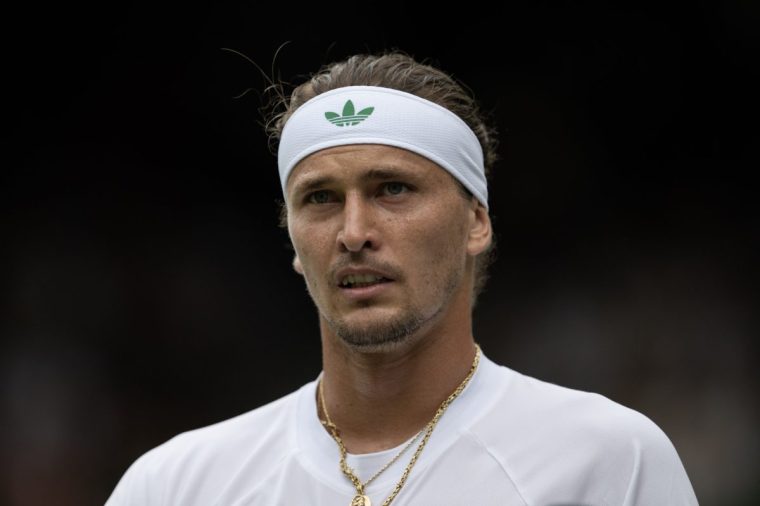
Alexander Zverev
exited Wimbledon after a shock first round loss, his parting message was that he would consider seeking therapy.
“I feel, generally speaking, quite alone in life at the moment,” he told reporters.
Once upon a time, this might have been a rare admission. But tennis players have increasingly been open about the power of seeking out help for their mental health.
Sports psychologists have often described professional tennis as one of the loneliest sports in the world, due to the combination of relentless travel, year-round tournament scheduling and individual pursuit on the court, creating a perfect storm.
Former world No 1 Ash Barty described the tour as a “lonely way of living” in her autobiography, while
Jack Draper
is also among those who has mentioned feeling isolated in his early years as a professional.
Read Next:
How Wimbledon’s pristine grass has been scorched by one player
Zverev, the world No 3, is the latest player to refer to this sense of loneliness after another grand slam disappointment.
“I feel very alone out there at times,” Zverev said on Tuesday, following his five-set loss to France’s Arthur Rinderknech.
“I struggle mentally. I’ve been saying that since after the Australian Open. I’m trying to find ways to kind of get out of this hole. I keep kind of finding myself back in it in a way.
“It’s not a feeling on a tennis court, it’s just a life feeling in general. I’ve never felt this way before. I don’t know. It’s difficult to find joy outside the tennis court for me at the moment. Again, I just feel generally very, very alone and very lonely. I don’t have the answers right now.”
He traces the start of his negative feelings back to
the Australian Open final
, which was a straight sets drubbing to Jannik Sinner.
It was his third grand slam final loss in the last five years.
He has also experienced significant turmoil off the court in that time, contending with
domestic abuse allegations
from two ex-girlfriends since 2020 – both of which he denied.

On Tuesday, he referred to those off-court incidents and said he would consider seeking out therapy.
“Maybe for the first time in my life I’ll probably need it,” he said.
“I’ve been through a lot of difficulties. I’ve been through a lot of difficulties in the media. I’ve been through a lot of difficulties in life generally.
“I’ve never felt this empty before – just lacking joy in everything that I do.”
Players’ willingness to talk candidly on the subject of mental health has grown.
In 2021, four-time major champion Naomi Osaka decided to speak publicly about suffering from “bouts of depression”, and it proved a watershed moment.
Since then, Madison Keys, Casper Ruud and Andrey Rublev are among those who have said they speak with a psychologist.
Read Next:
I used to hate watching Novak Djokovic at Wimbledon – now I’m a convert
Rublev has been known for violent outbursts on the court, even hitting himself with his racket to the point where he caused himself to bleed.
He released a documentary,
Breaking Back
, last week with the ATP, and described an unhealthy relationship with valuing his tennis results above anything else in his life.
The feeling of losing, he said, “is like you’re dying”.
On Wednesday, he said he could relate to Zverev’s emotions.
“In the end, tennis is just the trigger point,” Rublev told reporters at Wimbledon.
“It’s something inside of you that you need to face. It happens to everyone, because Sascha, he really loves tennis. The ones who don’t love tennis, they are more relaxed.
“They don’t really care because maybe they have different priorities, but the ones who love tennis, the tennis triggers you.”

The men’s and women’s tours have significantly boosted the resources available to players in recent years.
The WTA have an in-person mental health care provider at all Grand Slams, 1000, 500, 250 and selected 125 events.
They also have remote support for players between tournaments.
Their staffing numbers for mental health and performance have tripled in the last five years.
On the ATP side, they appointed director of player well-being Dr Ruth Anderson in 2022, and have just recruited a second sports psychologist to support her, beginning later this month.
Their on-site psychology services have existed at the Grand Slams and majority of ATP Masters 1000 tournaments since 2023, with plans to increase this to all Masters tournaments and selected smaller tournaments from August.
Players also have access to remote support, as well as resources tailored to educate male players on wellbeing.
Your next read

square
TENNIS
How Wimbledon’s pristine grass has been scorched by one player
square
TENNIS
Watch: How Emma Raducanu won her ‘best ever point’ at Wimbledon
square
TENNIS
Wimbledon’s treatment of Jack Draper is baffling
square
TENNIS
Four reasons the Brits can’t stop winning at Wimbledon
Australian Open champion Keys, another advocate for the power of therapy, believes attitudes around mental health have changed throughout her 16-year career.
“I don’t really remember it being a talking point much [at the beginning of my career],” she said on Wednesday.
“I think more and more players are open to saying, ‘I’m talking to someone’. I would say there’s probably more of us that are speaking to someone now than there was before.
“I think [the tour] have done a really good job at really helping all of the players through what is a really tough career.”
Keys put her Melbourne triumph earlier this year as partly down to seeking out the help of a therapist, specifically focusing on her life off the court rather than performance-related help.
“From a pretty young age, our identity becomes very wrapped up in being a tennis player,” she added.
“That’s great, but when you have the tough weeks, months, years on tour, that can really take a toll on how you think about yourself as a person. So being able to dive into that and figure out how to separate the two and know that you’re not just a tennis player.
“You’re a full person that has all of these other really great attributes. I think that kind of made the tennis a little bit easier.”
